
Faculty
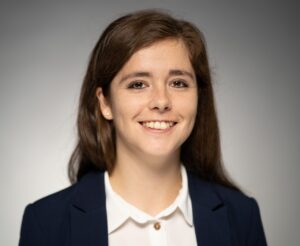
Bruna is an Assistant Professor in Cardiovascular Medicine. She completed her Doctor of Medicine in 2018 from Ruprecht Karl Universitat Heidelberg. She was a cardiologist in the Department of Cardiology, Pneumology and Angiology, Heidelberg University Hospital, Germany before completing an Advanced Cardiology Heart Failure Transplant fellowship at Stanford.
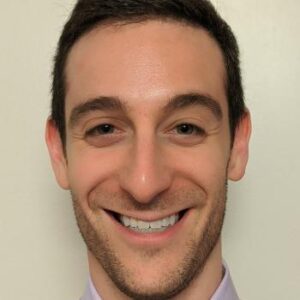
Daniel Katz is an Instructor of Medicine and an Advanced Heart Failure and Transplant Cardiologist. He completed internal medicine residency at Massachusetts General Hospital, general cardiology training at Beth Israel Deaconess Medical Center, and then joined Stanford in 2021 for his advanced heart failure training. Since medical school, his research has focused on identifying the various pathophysiologic patterns and mechanisms that lead to the heterogeneous syndrome of heart failure. His efforts leverage high dimensional data in many forms including clinical phenotypes, plasma proteomics, metabolomics, and genetics. He is presently engaged in analysis of multi-omic data from the Molecular Transducers of Physical Activity Consortium (MoTrPAC) and the NHLBI Trans-Omics for Precision Medicine (TOPMed) Program. His clinical interests include advanced heart failure, transplant cardiology, and mechanical circulatory support.
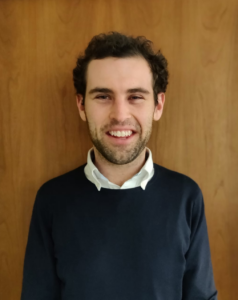
Jack is an Instructor in Cardiovascular Medicine at Stanford.
Jack is interested in the diagnosis and risk prediction of cardiovascular disease. Jack employs a variety of statistical methods to assess new diagnostic technologies, such as smart phones and smart wearables, and my work also extends to computational cardiac genetics. The data sources he utilizes to conduct my research are numerous, but include large datasets such as the UK Biobank, as well as publicly available dataset (meta-analysis and meta-research). He also has previously used large electronic health records (>250 million EHRs).
Aside from his own research prioritizes (above), Jack also work on studies conducted collaboratively within the Ashley Lab, the Division of Cardiovascular Medicine. These studies broadly include digital health randomized controlled trials (RCTs) and meta-research (including statistical methods such as meta-analysis, meta-regression etc).
Jack previously completed a DPhil (PhD) in clinical epidemiology at the University of Oxford as a Clarendon Scholar. The title of his DPhil thesis was: “Biostatistical and meta-research approaches to assess diagnostic tests”. Jack’s published research is available at the google scholar page (https://scholar.google.co.uk/citations?user=n5l7tL8AAAAJ&hl=en) and some of his code is publicly available at his GitHub (https://github.com/jackosullivanoxford).
Beyond academic institutions, Jack consults to the World Health Organization (WHO); including on WHO guidelines, where he is currently the methodological chair for a WHO guideline concerning the early(ier) detection of disease in adults. Jack also work as an associate editor at one of the BMJ sub-journals: BMJ EBM. During my DPhil Jack worked clinically at Oxford University Hospitals (John Radcliffe Hospital) and intend to return to clinical practice as a Physician-Scientist at Stanford upon the completion of my research Fellowship.
You can follow Jack on twitter (https://twitter.com/DrJackOSullivan): where you will find him tweeting about statistics, surfing, cardiology, medicine, epidemiology, health policy, and, occasionally, politics.

Chloe Reuter is a clinical and research genetic counselor with the Stanford Center for Inherited Cardiovascular Disease and Stanford Center for Undiagnosed Diseases. After growing up in Michigan and completing her undergraduate degree in upstate New York, she fled the cold winters for the wonderfully sunny Bay Area. She completed her MS in Human Genetics and Genetic Counseling at Stanford. Working mostly with adults, her clinical interests include arrhythmogenic cardiomyopathies and patients with undiagnosed genetic conditions. She is actively involved in research pertaining to the integration of genomic technologies into clinical care and defining arrhythmogenic cardiomyopathies, with particular interest in the DSP and FLNC genes. She’s also a clinical supervisor and research mentor to genetic counseling students training at Stanford. Outside of work, she loves all things food and travel!
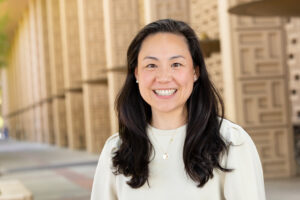
Kirsten Steffner is a cardiac anesthesiologist and critical care physician in the Department of Anesthesiology, Perioperative and Pain Medicine at Stanford University, and a postdoctoral research fellow in the Ashley Lab. Her research focuses on applying deep learning strategies to cardiovascular imaging and multimodal physiologic datasets. Kirsten integrates novel motion-based metrics from echocardiography and cardiac MRI with invasive hemodynamics, clinical outcomes, and proteomics, with the goal of improving diagnosis and risk stratification for patients with complex cardiovascular disease. In addition to her research, Kirsten is a dedicated clinician and teacher, providing perioperative care for patients undergoing complex cardiac surgery and mentoring trainees in anesthesiology, critical care, and echocardiography.

Yuta is an Instructor at Stanford University in the Ashley lab. He graduated and received DVM from Tokyo University of Agriculture and Technology in 2013. At veterinary school, he investigated the valvular disease of dogs. After graduation, he focused on the inherited cardiac diseases, and conducted research on CALM gene mutation-related arrhythmias (Calmodulinopathy) using iPS cell model in Kyoto University where he obtained a PhD in 2017. His current research interests are pathophysiological mechanism and gene therapy approach for inherited cardiac diseases. Outside the lab, he enjoys watching baseball games, reading books, playing video games, and California life.